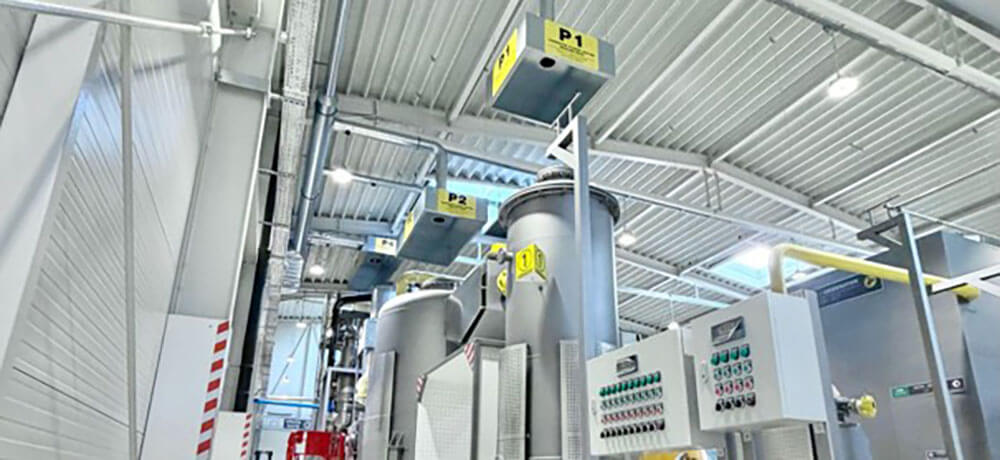
As work continues across the Themis Ecosystem (TE), the Biomass Ultima (BU) plant is entering its final stage before pilot operation. Over the past several months, development has focused not only on completing construction but also on refining countless technical details that will determine the plant’s long-term efficiency, safety, and operational reliability.
Although BU was conceived as a plant that transforms waste wood biomass into products of long-term strategic value, it also offers a range of innovations. Besides producing green electricity, the facility generates industrial raw materials for agriculture and other essential industries, including organic vinegar, organic tar, organic carbon, and organic fertilizer.
The technology has been developed to operate without emissions into the air, soil, or water while maintaining a high level of resource efficiency.
Although the overall concept has remained unchanged, the engineering behind the project has continued to evolve.
Latest Additions
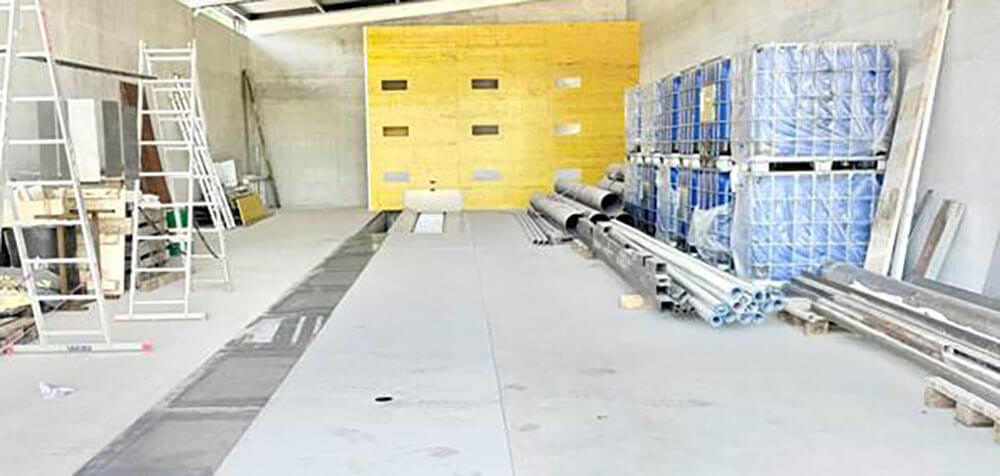
One of the latest additions is a custom-built, 50-meter conveyor system designed specifically for the BU production process. Unlike standard industrial conveyors, this installation was engineered exclusively for the plant’s operating requirements, ensuring a continuous and reliable flow of raw material throughout the production cycle.
Another important upgrade supports one of BU’s valuable by-products: wood vinegar. To optimize its production, the facility has been equipped with a new generation of processing technology together with advanced sensors that continuously monitor critical production parameters. This level of automation allows production quality to remain consistent while improving process stability.
Safety has received equal attention. A specially engineered storage facility has been constructed for incoming wood biomass. Designed according to Faraday cage principles, the oversized structure provides exceptional protection against lightning strikes and electrostatic disturbances while significantly reducing the risk of spontaneous combustion—one of the most important safety considerations when storing large volumes of wood material.
Environmental Protection: Beyond Emissions Alone
Fresh wood naturally contains moisture that can accumulate during storage. To address this, the BU facility incorporates dedicated collection systems for any water released from the raw material. Rather than allowing this water to enter the environment untreated, it passes through a filtration process within the plant’s own wastewater treatment system before being discharged into the public sewage network.
This closed, carefully controlled approach is another part of the plant’s environmental protection strategy.
On the exterior of the facility, construction of a dedicated loading station for liquid products is nearing completion.
Two custom-designed industrial crane pipes are being installed to enable the safe and efficient transfer of dense liquid media directly into tanker trucks. These systems will primarily be used for loading wood vinegar and organic tar, both valuable products generated during the production process.
Another Unique Feature of BU: Flexibility
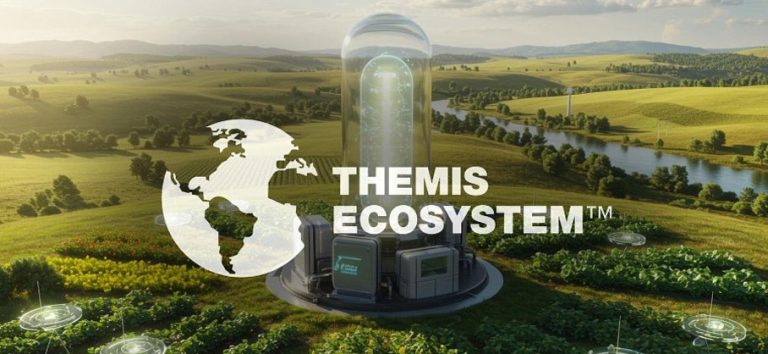
Originally developed to generate green electricity alongside industrial raw materials, the facility has since been adapted to support methanol production as well. This development was made possible through cooperation with Zhejiang Geely Holding Group, one of the world’s leading automotive and industrial technology companies.
In the BU configuration, the engine drives a generator that produces electricity while primarily emitting water vapor as a by-product.
Together with the plant’s existing production capabilities, this solution creates a highly adaptable platform capable of responding to changing market conditions and future energy demands.
Rather than relying on a single production pathway, BU has been engineered to switch between electricity generation, gas production, and methanol-based applications whenever required. This flexibility significantly strengthens the long-term commercial resilience of the entire project.
At the same time, numerous supporting systems have been completed throughout the facility.
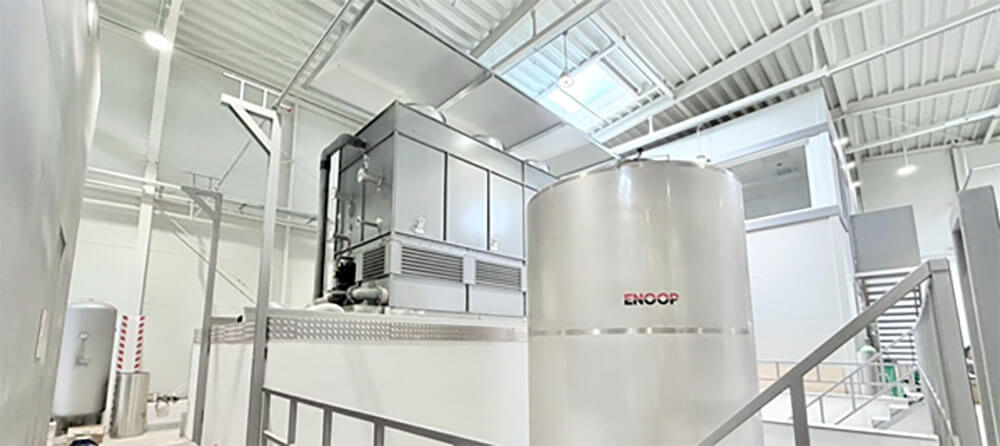
For example, cooling towers and an integrated water basin regulate process temperatures with high precision, particularly for engine cooling. Also, a dedicated condensation system captures excess moisture from warm air and returns it to the cooling circuit, minimizing water consumption through continuous recycling.
More Than a Construction Progress
Every improvement introduced over the past year reflects the same philosophy that guides the TE: long-term value is created through careful engineering rather than shortcuts.
While many industrial projects focus primarily on commissioning speed, BU has prioritized reliability, operational flexibility, environmental responsibility, and future scalability.
For everyone who has followed TE’s development from the beginning, these milestones represent more than just construction progress. They demonstrate how a long-term vision is gradually taking physical form—through technology designed to remain relevant for decades to come.