Food production is entering a period of profound transformation. Climate instability, declining soil quality, rising energy costs, increasing transportation expenses, and growing concerns about food safety are forcing the agricultural sector to rethink long-established practices.
While vertical farming has emerged as one of the most promising alternatives to conventional agriculture, it has also revealed several significant limitations, most notably high energy consumption and a substantial carbon footprint.
Themis Ecosystem (TE) made a plan to address these challenges together rather than individually. After several years of development, engineering improvements, and practical testing, the first FoodSphere 01 unit has successfully completed its initial test run.
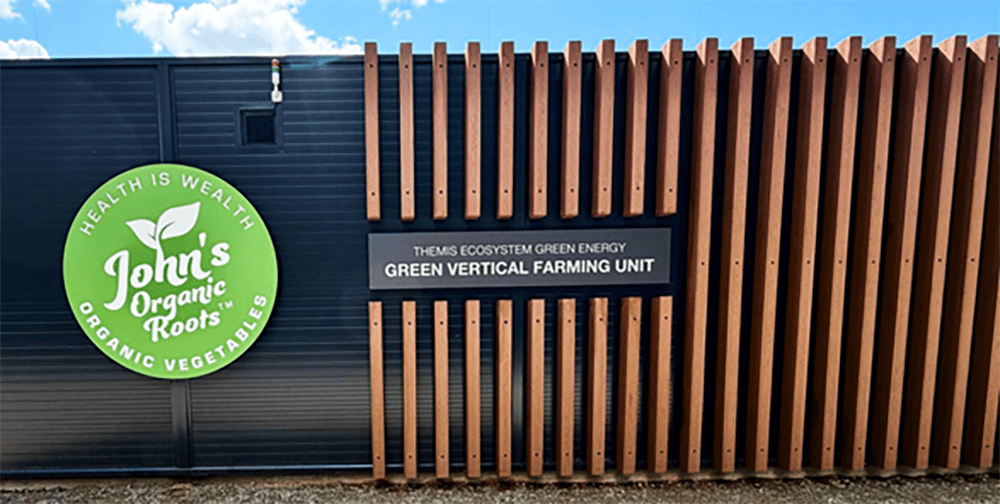
Developed as an integral part of the TE, John’s Organic Roots’ (JOR) FoodSphere 01 introduces a new generation of vertical farming, loaded with valuable innovations.
Beyond Organic Farming
For decades, consumers have relied on labels such as organic or wild-crafted to identify premium-quality food. Both categories undoubtedly offer important benefits, yet both also have inherent limitations.
Organic farming still permits the use of selected pesticides, herbicides, and other approved chemical preparations under existing regulations. Wild-crafted products, on the other hand, grow naturally but remain exposed to increasingly unpredictable environmental conditions, including air pollution, acid rain, contaminated water sources, microplastics, and extreme weather events.
PureCraft Foods was developed to move beyond both concepts. Instead of adapting crops to an increasingly unpredictable environment, JOR’s FoodSphere 01 recreates stable growing conditions inside a completely controlled production system. Every essential parameter—from light, temperature, humidity, and airflow to irrigation—is continuously monitored by its own automated computer control system operating around the clock.
The objective is simple: recreate conditions that resemble those of nature before modern industrial pollution dramatically altered the environment.
The PureCraft cultivation process eliminates exposure to pesticides, herbicides, fungicides, airborne contaminants, microplastics, and weather-related stress. Even irrigation relies on carefully filtered, recycled, and continuously monitored water, ensuring exceptional consistency throughout the production cycle.
The result is a production method that places food quality, environmental protection, and operational precision on equal footing.
Solving the Biggest Challenge of Sustainable Farming
Although indoor farming has become increasingly popular worldwide, one obstacle continues to limit wider adoption: electricity consumption.
Artificial lighting, climate control, air circulation, and automated monitoring systems consume significant energy. In many facilities, electricity represents one of the largest operating expenses while simultaneously increasing the overall carbon footprint of production.
John Organic Roots’ FoodSphere 01 unit was designed specifically to overcome this challenge. Through a series of engineering improvements, the development team reduced energy consumption to approximately 2.5 kW, substantially below the requirements of many comparable systems.
More importantly, the unit was never intended to operate as an isolated installation. Its permanent location would be next to the Biomass Ultima (BU) or Project Phoenix 8 (PP8) plant. It is powered by surplus green electricity generated during normal plant operations, enabling FoodSphere 01 to convert an otherwise unused resource into continuous food production.
The concept has also been designed for future expansion. A single BU installation, for example, producing 1 MW of electricity, can support up to twenty FoodSphere 01 units, creating an integrated local food production network powered entirely by alternative energy generated within the same ecosystem.
Designed for Practical Operation and Long Duration
Unlike many experimental vertical farming concepts, JOR’s FoodSphere 01 was developed for everyday commercial use.
The facility measures approximately 46 feet long, 8 feet wide, and 10 feet high, with a total weight of nearly 18,000 pounds. Its reinforced construction allows operation under demanding weather conditions, including heavy snow, hail, strong winds, and significant temperature variations, making it suitable for installation across diverse climates.
The interior has been optimized not only for cultivation but also for efficient daily work. A dedicated germination section accelerates early plant development, while an integrated loading ramp simplifies logistics and handling.
At the entrance, a specially designed airlock minimizes contamination by preventing outside air, dust, and moisture from entering the growing environment.
Together, these engineering solutions create a facility that combines durability, efficiency, and ease of operation with exceptionally low maintenance requirements.
Producing Food While Reducing Carbon Emissions
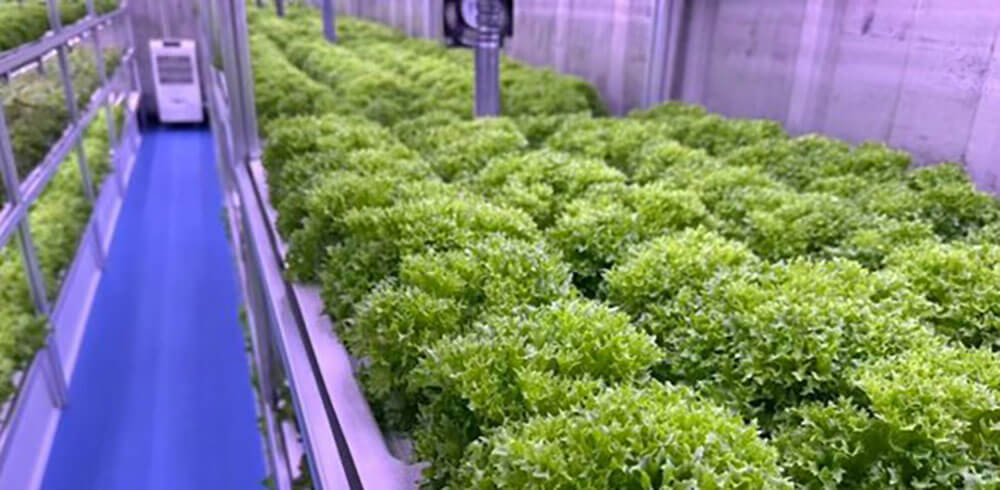
Perhaps the most distinctive feature of JOR’s FoodSphere 01 is that it was designed not only to minimize environmental impact but also to contribute actively to reducing harmful carbon emissions.
Carbon dioxide remains the principal greenhouse gas responsible for global warming. While many industries focus primarily on reducing emissions, TE requires its technologies to move beyond neutrality and deliver measurable reductions in the overall carbon footprint.
According to project studies, producing approximately 2,200 pounds of lettuce through conventional agriculture generates roughly 1,100 pounds of CO₂. FoodSphere 01 reduces that figure to approximately 330 pounds, representing a substantial improvement over traditional cultivation.
The environmental impact becomes even more meaningful when viewed from the consumer’s perspective.
Every pound of lettuce produced in JOR’s FoodSphere 01 reduces the overall environmental carbon footprint by approximately 0.35 pounds of CO₂. Certain crops perform even better. Purchasing one pound of wheatgrass powder, for example, corresponds to an environmental reduction of approximately 1.5 pounds of CO₂.
That way, every purchase becomes more than a food choice. Consumers receive premium-quality produce while simultaneously supporting measurable environmental improvement.
Local Food, Energy and the Community
The unit converts locally generated green energy into locally produced food, reducing dependence on long-distance transportation, refrigerated logistics, and complex international supply chains that significantly increase greenhouse gas emissions.
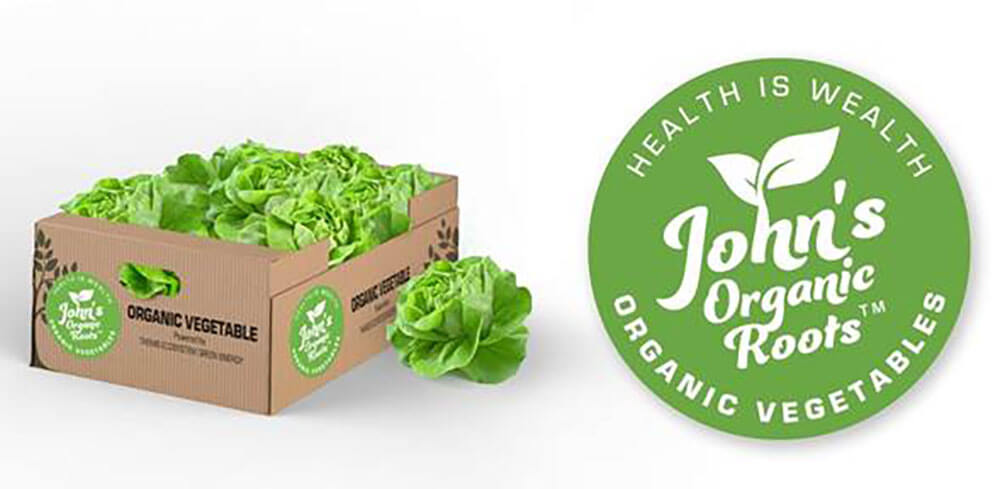
Production will include vegetables, herbs, flowers, mushrooms, and microgreens under the John’s Organic Roots brand, with cultivation adjusted according to actual market demand throughout the year.
The project also incorporates a strong social component. Ten percent of all production will be donated to families facing financial hardship as well as schools, kindergartens, retirement homes, and other community organizations. Distribution will be supervised by an independent three-member local committee responsible for ensuring that donations reach those who need them most.
The remaining ninety percent of production will be supplied through established commercial channels, creating a financially sustainable model capable of supporting long-term growth.
Sustainable Technological Solution
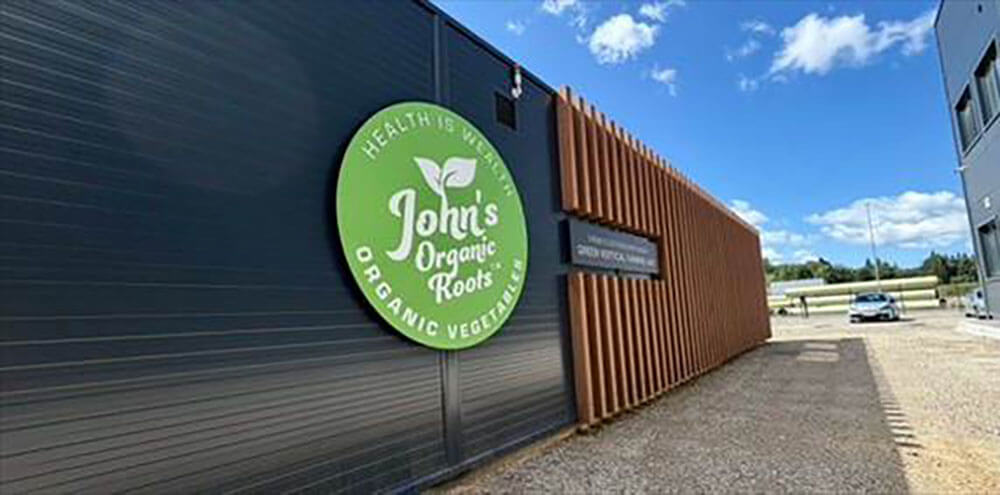
FoodSphere 01 was designed as a scalable application capable of accompanying future BU and other TE green energy production facilities whenever they are built. Each installation would transform locally generated surplus energy into high-quality food while supporting local employment, strengthening food security, lowering carbon emissions, and creating tangible social value.
In many ways, FoodSphere 01 represents the broader philosophy of the TE itself. Rather than solving one problem at a time, it connects energy, agriculture, environmental responsibility, engineering, and community development into a single integrated system.
As food production faces increasing challenges, solutions will need to deliver more than just higher yields. They must produce cleaner food, use energy more intelligently, reduce environmental impact, and strengthen the communities they serve.
JOR’s FoodSphere 01 was developed with precisely that objective in mind—not just to grow food, but to demonstrate how the next generation of agriculture can become cleaner, smarter, and genuinely sustainable.
Now, let us wait for the official group launch, which will coincide with the BU and the anti-stress capsule Asclepius8 opening.
We anticipate great success.