The future of sustainability will not be determined by ambitious climate declarations alone. It will depend on whether society can secure a stable supply of the essential products that support everyday life while reducing environmental impact.
Energy, food production, soil health, waste management, and access to strategic raw materials are no longer separate challenges. They have become parts of the same equation. Solving one without addressing the others no longer delivers lasting results.
This is precisely where the Themis Ecosystem (TE) takes a fundamentally different approach. Rather than focusing on a single technology or one environmental objective, it creates an integrated model of sustainability in which every component supports the next.
The Model for a Sustainable Future
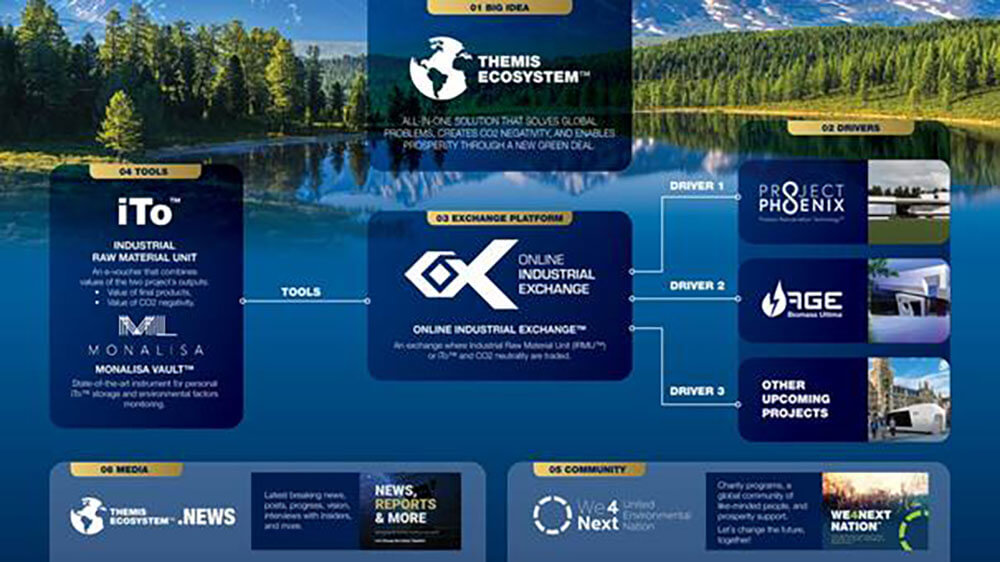
At the center of that model are the drivers. These are industrial technologies designed to produce the resources society will continue to depend on for decades while returning their value directly to local communities and agriculture.
This is why many experts increasingly view TE not as another sustainability initiative, but as one of the most comprehensive and practical models currently being developed.
Unlike many industrial projects that depend on rapidly changing market trends, TE focuses on products that civilization will require regardless of economic cycles:
- Electricity and alternative power sources will remain essential.
- Agriculture will continue to depend on effective soil improvement.
- Food production will require sustainable alternatives to conventional chemical products.
- Industries will continue to seek cleaner sources of energy and raw materials.
These needs are unlikely to disappear over the next fifty years. If anything, they will become even more important as populations grow and environmental regulations become stricter.
That long-term perspective shapes every driver within the ecosystem.
One Production Process, Multiple Essential Products
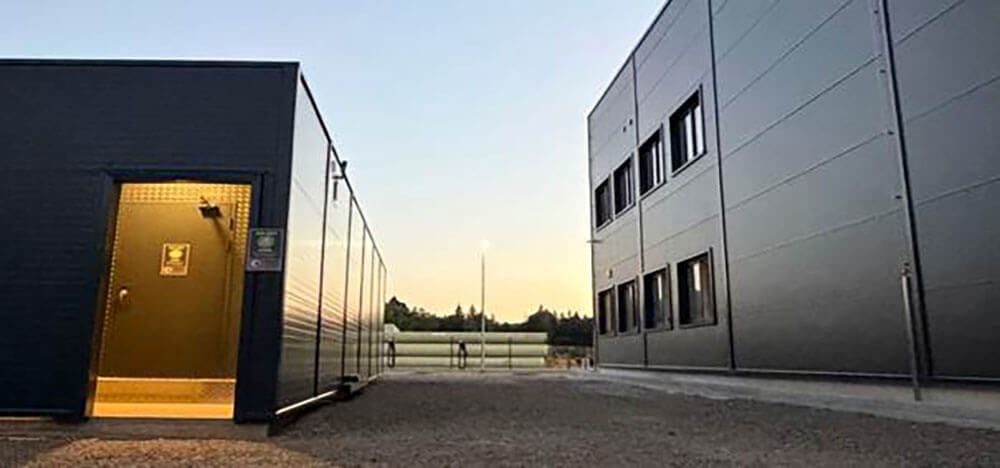
The first operational driver, Biomass Ultima (BU), illustrates this philosophy particularly well.
Instead of treating wood biomass as waste, the technology converts it into several valuable products simultaneously. The first is an energy source – by choice. BU can generate either green electricity, methanol, or gas, depending on market demand at the moment.
The plant also produces valuable subproducts: organic wood vinegar, organic tar, organic carbon, specialized agricultural products, and additional materials that support multiple industries.
Every output has a practical purpose, supporting agriculture, horticulture, and food production.
For example, organic wood vinegar can support sustainable crop production, organic fertilizers improve soil quality while reducing dependence on synthetic chemical products, carbon-based materials contribute to healthier soil and improved growing conditions, etc.
Rather than maximizing a single output, the entire production process has been optimized to utilize nearly every useful component of the incoming biomass.
This circular approach, based on sustainability, increases efficiency while significantly reducing waste. Waste becomes raw material. Raw materials become useful products. Those products help improve agricultural production, which strengthens local food resilience while reducing environmental impact.
The result is a practical example of a functioning circular economy rather than a theoretical concept.
A Model That Grows Through Integration

The second driver is a waste-to-energy plant, Project Phoenix8, which runs on a special Product Reincarnation Technology. It takes hydrocarbon waste, principally used tires and scrap plastic, and breaks it down at low temperature without oxygen and without emissions. The outputs are clean electricity and high-grade recovered carbon black. Bureau Veritas has confirmed the process. Economic efficiency is around 98 percent.
The third driver is Project X900, a wastewater sludge purification plant. It works without odor and with a negative carbon footprint. It has been tested and is aimed squarely at two problems that rarely get discussed together: municipal sanitation and farmland fertility.
Additional drivers waiting to join TE will continue to expand the ecosystem’s capabilities. But all of them follow the same principle: every project should generate tangible environmental, industrial, and community value at the same time, strengthening the communities where it operates.
New facilities create modern, highly skilled green jobs with strong added value. Local farmers gain access to products specifically developed to improve agricultural productivity while supporting compliance with increasingly demanding environmental standards.
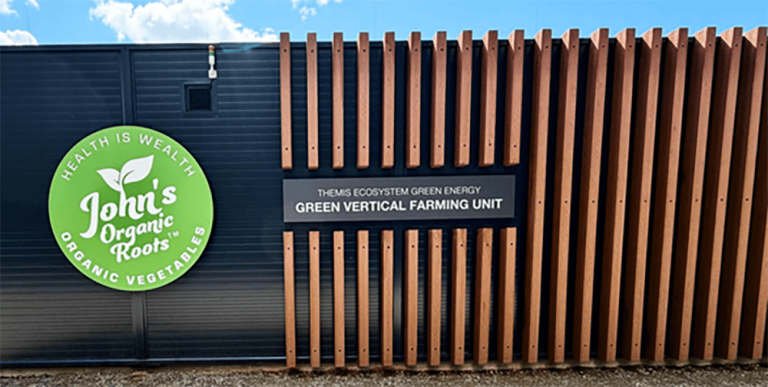
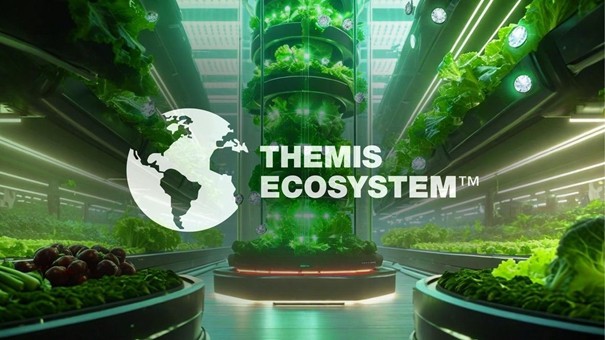
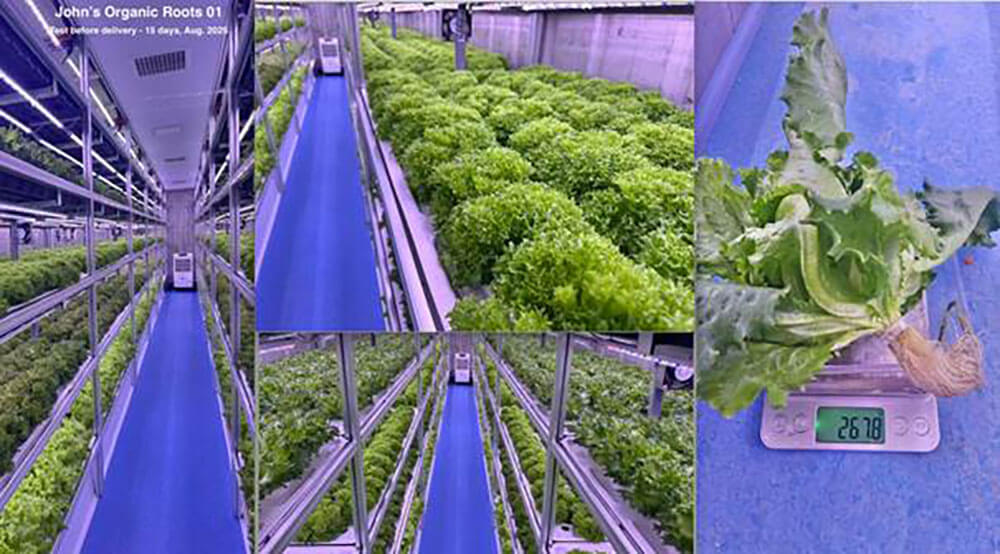
The Green Vertical Farming (GVF) initiative further expands this local impact. Powered entirely by surplus energy from the BU plant, the units produce fresh vegetables without pesticides, independent of weather or seasonal changes, under the brand John’s Organic Roots.
A portion of every harvest is designated for social programs that support families and institutions in the local community.
Instead of exporting value elsewhere, the ecosystem continually reinvests it in the place where it is created.
Building for the Next Fifty Years
Many sustainability initiatives are measured by how effectively they reduce today’s emissions.
TE asks a different question: Which products will humanity continue to need fifty years from now?
The answer is remarkably consistent: clean energy, healthy food, fertile soil, sustainable agriculture, strategic raw materials, and technologies that support life and healthy living.
Every driver within the ecosystem has been selected because it contributes directly to these long-term needs.
This is what distinguishes the TE from many conventional sustainability projects. It is designed around products that will remain essential regardless of changing economic conditions.
As the world searches for practical pathways toward a more resilient future, the strongest solutions will likely be those that combine environmental responsibility with industrial productivity, economic stability, and local prosperity.
TE has been built with exactly that objective in mind: creating a sustainable model in which breakthrough technologies produce the resources society depends on, strengthen local communities, support agriculture, and establish a circular system that remains relevant.
Not just for the next few years, but for generations to come.